Sell your classic car

Thinking about changing the wheels on your Classic Mini, or buying one and wondering which setup would suit you? Wheel size shapes both the car’s appearance and the way it feels on the road. From traditional 10-inch wheels to practical 12-inch setups and the bolder look of 13-inch alloys, each brings its own benefits and compromises. This guide explores the differences to help you choose a Mini that looks right to you—and feels right behind the wheel.
Sir Alec Issigonis (1906-1988) was the engineer and designer behind the original Mini, launched in 1959. He wanted a car only about ten feet long that could accommodate four adults and their luggage. Small wheels meant smaller wheel arches, leaving more room inside. Together with the transverse engine and compact suspension, they helped make that possible.
He originally proposed 8-inch wheels because of his aim of maximising interior space: smaller wheels needed smaller arches, leaving more room for passengers and luggage. However, Dunlop, the tyre supplier, rejected the 8-inch proposal and recommended 10 inches, due to production feasibility.
Positioning those wheels close to the car’s four corners also supported its handling while making efficient use of the body’s dimensions. Mini’s historical account says approximately 80% of the car’s footprint was devoted to passengers and luggage. Mini’s 60-year history.
The small wheels were therefore an integral part of the original design—and helped create the compact proportions and driving character owners still associate with the Classic Mini.
10-inch wheels preserve the traditional appearance and are often favoured for light steering and a comfortable, responsive feel. Brake compatibility is a key limitation. Some clients suggest that Minis drive the best on 10” wheels.
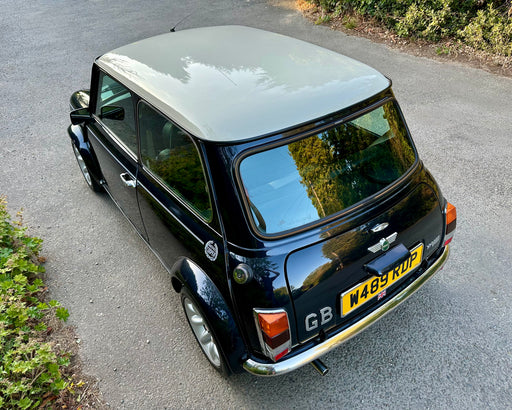
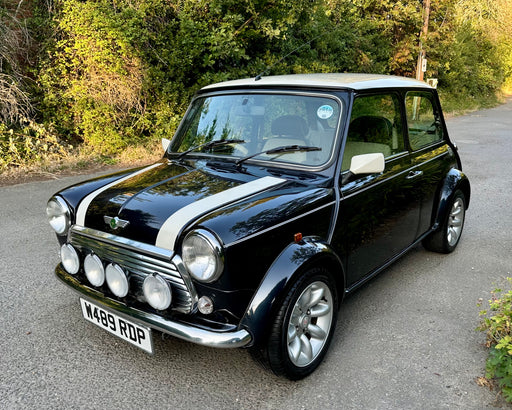
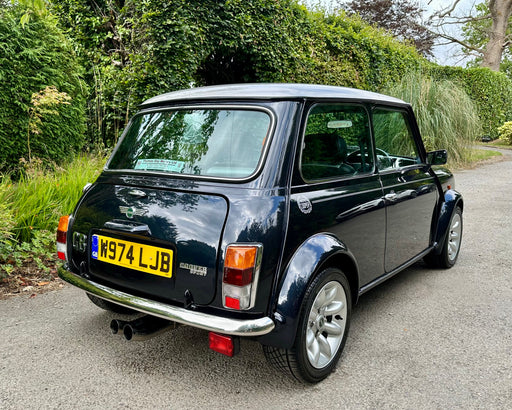
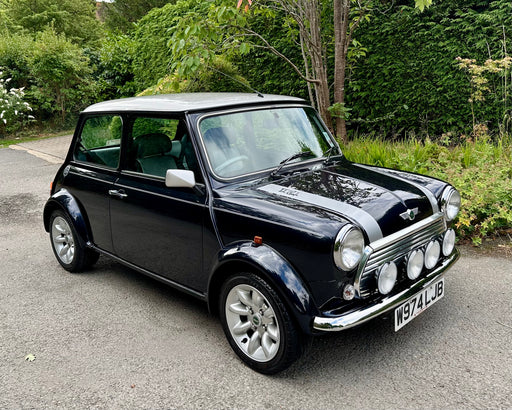
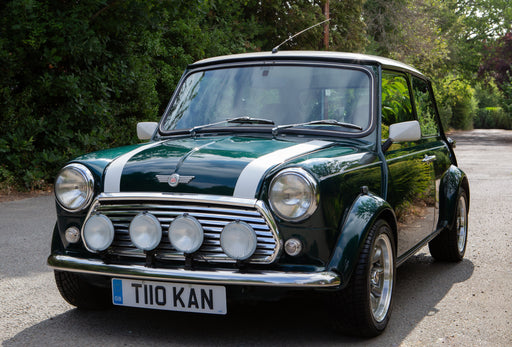
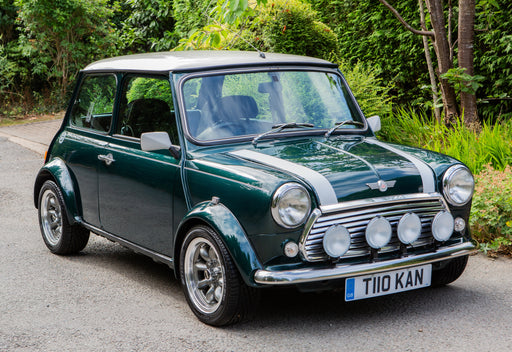
Image -1994 Classic Rover Mini John Cooper Si+ with 12-inch Minilite alloy wheels.
12-inch wheels offer a practical compromise, however opinions on their driving feel vary. I have heard mini owners describe the steering as light and accurate, and a general feeling of it just being ‘right’ but others have found them less responsive than 10-inch wheels. It comes down to personal preference.
Their history goes back further than you might expect. John Cooper’s racing Minis began using 12-inch wheels in the late 1960s. With the front tyres responsible for steering, braking and delivering power, overheating and rapid wear were problems in competition. The larger wheel-and-tyre combination helped the tyres run cooler and last longer.
On production cars, larger brakes drove the change. The 1275 GT adopted 12-inch wheels in 1974, making room for bigger front discs. In 1984, 12-inch wheels became standard across the mainstream Mini range alongside front disc brakes—bringing a solution first used on the sporting model to everyday Minis.

13-inch wheels give a Classic Mini a wider, more assertive appearance, but that look can come with compromises. Heavier steering, greater sensitivity to road imperfections and more demanding clearance requirements all feature in the discussion. One owner described their experience of 13-inch wheels as “horrible”, although individual setups and preferences vary.
Other Mini owners challenge the assumption that larger wheels automatically improve road handling. If they are designed for heavier cars it would make it harder for a lightweight Mini to reach their intended operating temperature and grip. The general advice is to not fit 13-inch wheels to a drum-braked Mini.
Fitment can add considerably to the cost. Front arches may need cutting, finishing and rust protection, followed by wider arch extensions. Some combinations also require spacers or restricted steering lock. There are also potential losses in acceleration, fuel economy and top speed. The complete conversion needs to be considered before committing to the appearance.
| Year | What changed? | Why? |
|---|---|---|
|
1959 Launch |
The Mini entered production on 10-inch wheels, originally with cross-ply tyres. | Small wheels helped its compact design maximise passenger space. Radial tyres became common later; 145/80 R10 is a familiar radial fitment, rather than the original specification for every early Mini. |
|
1974 Mini 1275 GT |
The 1275 GT moved from 10-inch to 12-inch wheels, with 145/70-series radial tyres. | The larger wheels accommodated 8.4-inch front discs, replacing 7.5-inch discs. Contemporary reporting also highlighted expected improvements in handling and tyre wear. |
|
1984 Mainstream range |
12-inch wheels and front disc brakes became standard on ordinary production models, commonly using 145/70 R12 tyres. | The larger brake assemblies needed more wheel clearance. This was the main changeover for everyday Minis. |
|
Late 1996 Sportspack option |
The revised Cooper offered 13-inch wheels, associated with 175/50 R13 tyres. | They formed part of a sportier appearance package. They did not replace 12-inch wheels across the whole range. |
On a Classic Mini, a larger rim is usually paired with a lower-profile tyre to keep the overall diameter similar. That leaves less tyre sidewall to flex and cushion bumps, so potholes, broken surfaces and sharp ridges can feel more pronounced. A smaller rim with a taller sidewall generally gives a more forgiving ride.
Weight also matters. A heavier wheel-and-tyre combination places greater demands on the dampers as the wheels move over uneven roads. If dampers are worn or unsuitable they can struggle to control this movement.
In summary, 10-inch wheels generally favour comfort, 12-inch Mini wheels offer a practical balance, and 13-inch wheels often bring a firmer ride. But diameter alone doesn’t decide the result: tyre construction, pressure and suspension condition also matter.
The best choice depends on what you enjoy about your Mini and how you use it.
10-inch wheels suit owners who value the original appearance, light steering and a more forgiving ride. They are a natural choice for many early-car restorations, provided the brakes are compatible.
12-inch Mini wheels offer a practical balance of comfort, appearance and clearance for larger brakes. They suit many later Minis and owners who want an enjoyable car for everyday journeys.
13-inch wheels suit Sportspack-style and wider-arched builds. The appearance can be appealing, but owners should budget for supporting modifications and accept potential compromises in steering and comfort.
Even the Mini’s famously tiny 10-inch wheels were a step up from Issigonis’s original vision—a reminder that wheel size has been a compromise from the very beginning.
The Mini John Cooper LE 40 was unveiled in 1999, celebrating 40 remarkable years of the Mini and honouring the Cooper’s triumph in the F1 World Cha...
View detailsThis Mini Cooper Sportspack was first registered by Bristol Minis on 8th August 2000 and is presented in rare Nightfire Red with a white roof and b...
View detailsThis Mini Cooper Sportspack was first registered on 22nd February 1999 and is presented in Anthracite grey with a white roof and body decals, over ...
View detailsThis Mini Cooper Sportspack was originally supplied by Evans Halshaw Rover on 31st March 2000 and is presented in rare Anthracite grey with a white...
View detailsWe are delighted to present this stunning Mini Cooper Sport, originally supplied by Thomas Day Motors, Fleet on 30th June 2000. The Mini is finishe...
View detailsThis Mini Cooper Sportspack was originally supplied by Whichford Rover, Basingstoke on 1st March 1999 and is presented in iconic British Racing Gre...
View details