Sell your classic car

If you ask any long-time Mini owner what drew them to a particular car, the answer is rarely just the engine size or trim level. A car with a traceable past can mean more to the buyer than one with a blank history, even when the two are mechanically identical. In this blog, we share why stories add to a Mini’s appeal, go back in time with some interesting histories, and identify what to look out for in a Classic Mini’s story.
A Classic Mini that’s stayed with one family for decades, or that comes with a folder of receipts, event entries and old photographs, carries something a spec sheet can’t capture. Long-term ownership in particular tends to reassure buyers, since a car kept by one person for twenty or thirty years has usually been cared for consistently.
Original paperwork adds another layer. A logbook showing continuous history, old MOT certificates, or a dealer’s original invoice all help build a picture of where the car has been and how it's been treated. Retained period details, such as original interior trim, correct-to-year badging, or unmodified mechanical components, often matter just as much to enthusiasts as outright condition, since these details are harder to replace convincingly once lost.
A Mini with genuine history and a documented past is often seen as more appealing than a smarter-looking car with no known background.
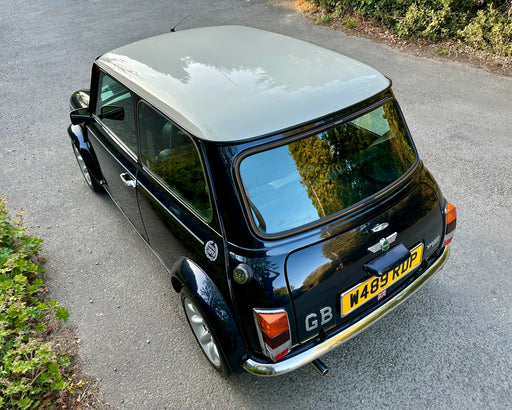
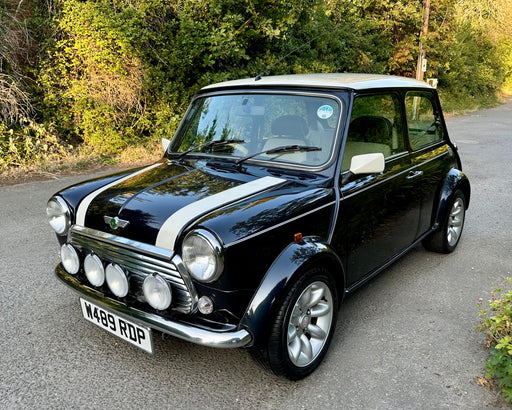
1999 Classic Rover Mini 40

The owner first saw this Island Blue Mini 40 at the Mini 40th anniversary celebrations at Silverstone in 1999 and tried to order one on the spot, but all examples had already been allocated. They joined a reserve list and later received a call from Rover saying one had become available, and they travelled straight to Diamond Rover in Hatfield to secure it.
The car stayed with this owner for 27 years and became well known in the Mini community, taking part in Tower to Tower from Blackpool to Paris, London to Brighton runs and Mini Grand Tours in Devon. Some of the event stickers remain on the car.
This car is one of 250 Mini 40s allocated to the UK market and just one of 50 Island Blue examples produced.
1999 Classic Rover Mini John Cooper LE 40

To honour the Cooper’s triumph in the F1 World Championship and to celebrate 40 years of the Mini, the John Cooper LE 40 was unveiled in 1999 as a limited edition with only 300 units produced. Supplied by Dixon Rover, it has been owned by the same family for the past 17 years.
The Mini was exclusively offered in striking Brooklands Green, which contrasts with the Old English White roof and Grenadine Red interior. It also retains the original factory body number on the slam panel.
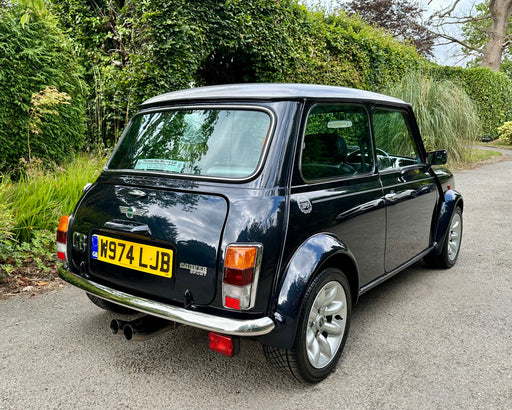
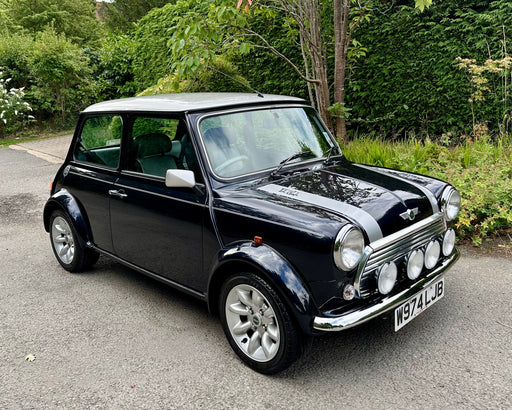
1997 Classic Rover Mini Cooper S Sport 5 by John Cooper Garages
The Cooper S Sport 5 was the first Classic Mini equipped with a Jack Knight five-speed close-ratio gearbox as standard, which maximised its performance and helped it truly stand out. It is also believed that as few as 30 units were produced, making it one of the rarest.
This Sport 5 is finished in a rare combination of charcoal metallic with a white roof and bonnet stripes, as well as a rare Cumulus leather interior. It holds a number 5 John Cooper plaque and a passenger sun visor signed by Paddy Hopkirk.
1999 Classic Rover Mini 1.3i MPI

First registered in November 1999, this Rover Mini has spent the past eight years in the care of an enthusiast, who used it sparingly, maintained it well and kept it garage stored when not in use. It currently shows just 31,562 miles and has recently benefited from restorative work, including new outer sills and a powder-coated rear subframe.
Finished in striking Solar Red with a contrasting stone beige ‘Balmoral’ interior, it retains plenty of period character, including its burr walnut dashboard, magnolia-faced dials, 12-inch alloy wheels and leather-trimmed steering wheel and gear knob. Its 1275cc multi-point injection engine has also recently been serviced and remains lively and responsive on the road.
This 1999 Classic Rover Mini 1.3i MPIs is currently for sale for £11,995.
Yes, engine size, colour and trim level are the details that tend to appear first in a listing. But experienced buyers treat these as a starting point, rather than the whole picture. Specification tells a buyer what the car is on paper, while history adds depth and tells them what it's actually like to own.
Two Minis with the same specification can have completely different stories, and that difference affects both enjoyment of ownership and long-term value. As we’ve shared with the examples above, it's always worth asking:
A Mini that's been driven and maintained consistently often proves more reliable than one that looks pristine but has sat unused.
Several types of documentation and detail combine to build a fuller picture of a Classic Mini’s past.
Registration history shows how many owners a car has had and, in some cases, roughly how it’s been used over time. A continuous, well-documented registration trail is generally easier to trust than one with unexplained gaps.
Dealer information, such as the original selling dealer’s details or later service stamps, can confirm where a car has been maintained and by whom.
Factory plaques and original stickers are small details, but they matter to collectors because they’re easy to lose and hard to replicate convincingly. A tax disc holder, a dealer badge, or a factory build plate still in place adds a layer of authenticity that’s difficult to fake.
Magazine features occasionally turn up when a car has appeared in a classic car publication, an owners’ club newsletter, or an event write-up. These can help confirm a car’s appearance and specification at a particular point in time, which is useful for tracing changes over the years.
Receipts for parts, servicing and restoration work build a picture of ongoing care and show what’s been done to the car, and when. This is particularly useful for buyers trying to understand whether a restoration was carried out properly.
Photographs, whether from the current owner, a previous one, or an event archive, help confirm a car’s history and can sometimes settle questions about originality that paperwork alone can’t answer.
You can discover more about how to verify a Classic Mini’s history before you buy, but it’s worth being realistic. Not all Classic Minis come with a complete, unbroken paper trail going back to the day they left the factory. Understandably, documents get lost, previous owners lose records, and older paperwork doesn’t survive. A gap in the history certainly isn’t a reason to dismiss a car outright.
If you’re wondering whether to buy an old Mini, we always advise buyers to look at each car on its own terms. A thin history file for a car that’s been well maintained and honestly presented can still be a good buy. Equally, a thick folder of paperwork doesn’t replace the need to check the car itself, including its condition, mechanical health and whether the details in the documentation actually match what’s in front of you.
History adds context and reassurance, but it works alongside a proper assessment of the car, not instead of one.
If you need more advice about buying or selling a Classic Mini, please browse our Classic Minis for sale, find out how to sell your Classic Mini, or contact Phil Mires Classic Cars.
Supplied new by Mill Garage Rover on 1st March 2000, this Mini Cooper Sportspack is finished in iconic British Racing Green with a contrasting whit...
View detailsThe Mini John Cooper LE 40 was unveiled in 1999, celebrating 40 remarkable years of the Mini and honouring the Cooper’s triumph in the F1 World Cha...
View detailsThis Mini Cooper Sportspack was first registered by Bristol Minis on 8th August 2000 and is presented in rare Nightfire Red with a white roof and b...
View detailsThis Mini Cooper Sportspack was first registered on 22nd February 1999 and is presented in Anthracite grey with a white roof and body decals, over ...
View detailsThis Mini Cooper Sportspack was originally supplied by Evans Halshaw Rover on 31st March 2000 and is presented in rare Anthracite grey with a white...
View detailsWe are delighted to present this stunning Mini Cooper Sport, originally supplied by Thomas Day Motors, Fleet on 30th June 2000. The Mini is finishe...
View details