Sell your classic car

Choosing between the first Mini and a final Rover-built Classic Mini is not simply about deciding which car is better. It is about choosing which part of the Mini story matters most to you.
The 1959 original is the purest version of Alec Issigonis’ idea: compact, clever, simple and full of character. The final Classic Minis, built in 2000, kept the same recognisable shape and front-wheel-drive layout, but added more comfort, stronger performance and a more collectable late-production specification.
So, how much changed in 41 years? More changed in comfort, safety expectations, performance, trim and visual stance than in the Mini’s basic character. The final Classic Mini was far more developed than the 1959 original, but it still looked, felt and behaved like part of the same story.
For the full model timeline, read the history of the Classic Mini.
Scroll sideways to view the full comparison table on smaller screens.
| Area | 1959 original Mini | Final Rover-built Classic Mini | What changed? |
|---|---|---|---|
| Production era | Launched in 1959 as the Austin Seven and Morris Mini-Minor | Final Classic Minis were built in 2000 | The Mini stayed close to its original concept for 41 years |
| Engine | 848cc A-Series engine | 1275cc MPI A-Series engine on late models | Later cars gained more capacity and stronger performance |
| Fuel system | Carburettor-fed | Multi-point fuel injection on final-era cars | Later Minis became smoother, easier to start and better suited to emissions rules |
| Power | Around 34bhp | Around 62bhp | Power almost doubled, although the Mini remained more about feel than speed |
| Layout | Transverse engine and front-wheel drive | Transverse engine and front-wheel drive | The defining space-saving layout stayed central to the Mini’s identity |
| Gearbox | Four-speed manual | Four-speed manual | The gearbox remained familiar, but later MPI gearing made cruising more relaxed |
| Brakes | Drum brakes on early standard cars | Front disc brakes | Later cars offered more stopping confidence |
| Collectability | Valued for originality and historic importance | Valued for usability, specification and last-of-line appeal | Both are desirable, but for different reasons |
| Exterior | 10-inch wheels, narrow arches, exposed hinges and sliding windows | 13-inch Sportspack alloys, wider arches, driving lamps and more polished trim on Cooper Sport models | The basic shape stayed, but the late cars had a wider, more assertive stance |
| Interior | Painted metal dashboard, central speedometer and minimal trim | Leather trim, walnut or engine-turned dashboards, extra gauges and improved equipment | The Mini moved from affordable transport to enthusiast-led classic |
| Suspension | Rubber cone suspension | Rubber cone suspension | The Mini’s sharp, compact handling character remained part of its appeal |
The Mini’s greatest strength was always its packaging. With the engine mounted transversely and the wheels pushed out towards the corners, the original Mini made unusually good use of a very small footprint.
That idea stayed central to the car until production ended. A final Rover-built Classic Mini is more comfortable and better equipped than a 1959 example, but the stance, proportions and compact road presence are still familiar.
This is why early and late Minis still feel connected. The later cars gained fuel injection, improved trim, stronger Cooper specifications and a more refined cabin, but they did not lose the small, upright shape that made the original so distinctive.
Stand a 1959 Mini next to a 2000 Cooper Sport and one of the biggest surprises is how much wider and more purposeful the later car appears.
The earliest Minis sat on small 10-inch wheels with narrow tyres, slim chrome detailing, exposed door hinges and sliding side windows. They looked simple, light and almost delicate, which suited the car’s original role as practical, affordable family transport.
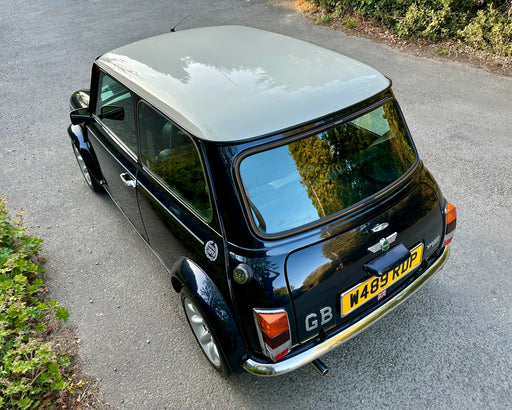
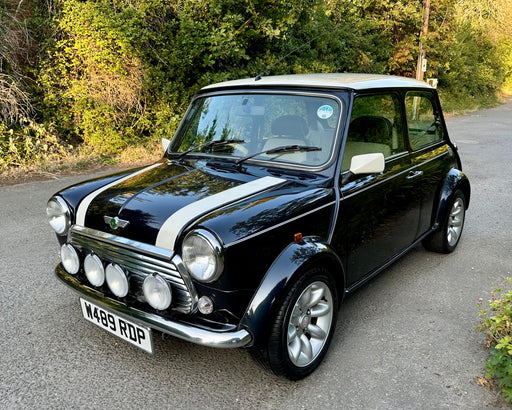
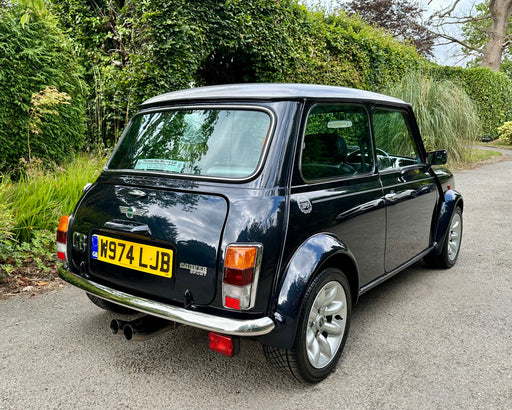
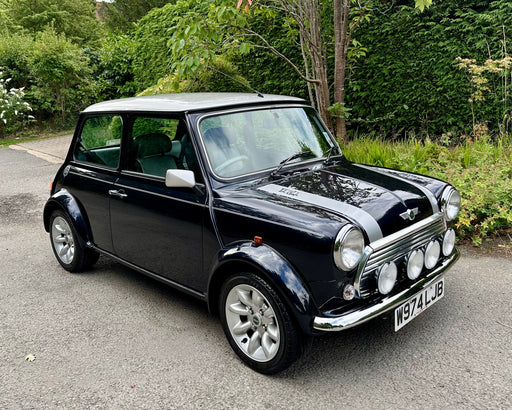
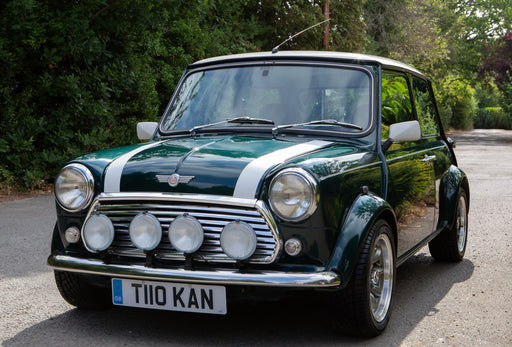
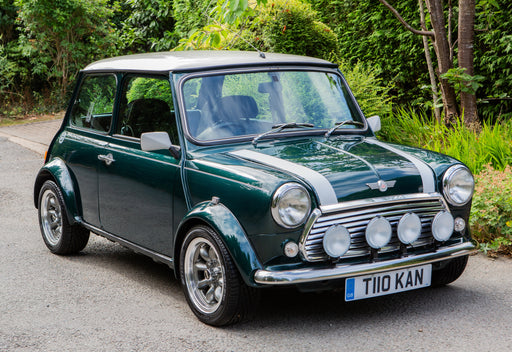
By the final years of production, especially on Cooper Sport and Sportspack models, the Mini had a much stronger road presence. Late cars could feature 13-inch alloy wheels, wider tyres, extended Sportspack wheel arches, driving lamps, contrasting roofs, bonnet stripes and more distinctive Cooper detailing.
The difference is not just cosmetic. A late Sportspack Mini can look almost muscular compared with an early Mk1, despite still being recognisably part of the same basic design.


1959 Austin Seven next to one of our late Cooper Sports. From slim 10-inch wheels and exposed hinges to wider Sportspack arches and 13-inch alloys, the Mini’s proportions became noticeably more assertive by the end of production.
Even non-Mini enthusiasts can usually tell the difference once they know what to look for.
Early Mk1 Minis had several distinctive features, including exposed door hinges, sliding side windows, a simple front grille and a very minimal cabin. Inside, they often featured a painted metal dashboard, shelf-style storage and a single centrally mounted speedometer.
Later Classic Minis became more conventional and more refined. Door hinges were hidden, winding windows replaced the early sliding arrangement, weather sealing improved and the cabin gained more trim, better seats and a more finished feel.
These details are part of what makes early Minis so appealing to collectors. They feel close to the original design brief and show how simple Issigonis’ idea was at the beginning.
Inside, the transformation was even greater than the exterior suggests.
The original Mini was designed around function. Its central speedometer, painted metal dashboard and open storage shelf kept the cabin simple and helped Austin and Morris versions share key components. There was very little to distract from the car’s practical purpose.
By 2000, many late Rover Minis had become far more polished. Cooper and Cooper Sport models could feature leather-trimmed seats, additional gauges, walnut-effect or engine-turned dashboards, chrome details, better sound insulationand a more premium overall feel.
This change says a lot about how the Mini’s role evolved. The early car was designed as affordable transport. The final Classic Mini was bought largely by enthusiasts who wanted charm, specification and collectability.
See below for a early Mini dashboard with central speedometer and a late Rover Mini Cooper Sport interior with leather trim and full dashboard.


By 2000, the Classic Mini had become much more than affordable small-car transport. Late Rover-built examples, especially Cooper and Cooper Sport models, were aimed at buyers who wanted classic Mini charm with more comfort, more performance and a stronger sense of occasion.
The biggest difference is the level of finish. Early Minis were simple and functional, with a cabin designed around practicality. Late Classic Minis often feel more polished, with leather seats, alloy details, improved trim and a more premium feel.
They are also easier to enjoy regularly. A late 1275cc MPI Mini has stronger performance than an early 848cc car, while fuel injection makes it more usable in modern traffic. It is still a classic car, but it is often a more approachable one.
The gearbox remained a four-speed manual, but later MPI Minis also benefited from more relaxed gearing than earlier cars. That makes a noticeable difference if you want to drive the car beyond short local trips.
The Mini became famous for its go-kart handling, but its suspension story is more interesting than many people realise.
The earliest Minis used Alex Moulton’s innovative rubber cone suspension. This compact system helped save space and contributed to the Mini’s direct, lively feel.
Some 1960s Minis later used Hydrolastic suspension, which was designed to improve ride comfort by linking the front and rear suspension on each side of the car. Rover eventually returned to the simpler rubber cone setup, helping preserve the sharp handling character that many enthusiasts still associate with the Classic Mini.
This is one reason early and late Minis can feel so closely related. Even after decades of development, the Mini’s compact size, light responses and wheel-at-each-corner stance remained central to the driving experience.
For regular enjoyment, a final Rover-built Classic Mini will usually be the easier choice. Later cars offer more power, better braking on Cooper models and a more comfortable specification.
An early Mini needs a different mindset. It is more basic, more historically significant and often more appealing to someone who values originality above convenience.
Condition matters more than age alone. Buyers should look closely at rust, panel fit, restoration quality, service history, originality and provenance. On late limited-edition Minis, paperwork, certificates, mileage and correct specification can make a big difference to desirability.
Final Rover-built Classic Minis are collectable because they combine the familiar Mini shape with end-of-production significance. They represent the last chapter of a car that remained closely linked to its 1959 origins for more than four decades.
Late Cooper and Cooper Sport models are especially appealing because they offer the strongest blend of usability, specification and visual presence. Details such as Sportspack arches, 13-inch alloy wheels, Rallye-style lamps, leather trim and the 1275cc MPI engine make them feel more distinctive than standard models.
That is where models such as the Mini Cooper Sport 500 become important. With only 500 produced for the final run, they carry genuine last-of-line appeal. For many enthusiasts, that gives them a different kind of desirability from the earliest cars.
We regularly handle later Rover-built Minis, including Cooper, Cooper Sport, Sportspack and special-edition examples from the 1990s and 2000. Earlier Mk1 and Mk2 Minis are much harder to find in this kind of stock history, so a useful visual comparison would be to place a period image of a 1959 Austin Seven or Morris Mini-Minor alongside one of Phil’s later Cooper Sport examples.


Phil’s later Classic Mini examples (1990 Rover Mini Cooper RSP & 2000 Cooper Sport) show how the car evolved into a more collectable enthusiast model, with stronger specification, wider arches and more distinctive interior trim.
Collectors often split into two camps.
Some believe the purest Mini experience comes from the earliest Mk1 cars, with their exposed hinges, sliding windows, minimalist interior and historic importance. These cars represent the Mini as it was first imagined: clever, compact and free from unnecessary decoration.
Others prefer the final MPI Minis because they represent 41 years of development. They are generally easier to start, easier to use in modern traffic and more comfortable for regular driving, while still feeling unmistakably like a Classic Mini.
Neither group is wrong. They simply value different parts of the Mini story.
Our 2000 Classic Rover Mini Cooper Sport video shows a late-production example of the kind of final-era Mini described above. Supplied in Weybridge in April 2000, this Anthracite and Platinum Silver Cooper Sport has covered 21,358 miles and features the 1275cc multi-point injection engine, four-speed manual gearbox, Sportspack alloy wheels and leather-trimmed interior.
It is a useful example of how far the Classic Mini developed by the end of production. The specification is more polished than an early Mini, but the compact stance, short wheelbase and lively character are still unmistakably Mini.
Choose an early Mini if you care most about originality, simplicity and historic importance. These cars represent the beginning of the Mini story and appeal to buyers who want the design in its purest form.
Choose a final Rover-built Classic Mini if you want more comfort, stronger performance and last-of-line collectability. These cars are often better suited to regular enjoyment, especially when condition, mileage and provenance are strong.
Neither version is the wrong choice. The first Mini shows where the story began, while the final Classic Mini shows how much the car could evolve without losing its identity.
If you are looking for a carefully selected late Classic Mini, browse our Classic Minis for sale or contact us to discuss what you are looking for.
The Mini John Cooper LE 40 was unveiled in 1999, celebrating 40 remarkable years of the Mini and honouring the Cooper’s triumph in the F1 World Cha...
View detailsThis Mini Cooper Sportspack was first registered by Bristol Minis on 8th August 2000 and is presented in rare Nightfire Red with a white roof and b...
View detailsThis Mini Cooper Sportspack was first registered on 22nd February 1999 and is presented in Anthracite grey with a white roof and body decals, over ...
View detailsThis Mini Cooper Sportspack was originally supplied by Evans Halshaw Rover on 31st March 2000 and is presented in rare Anthracite grey with a white...
View detailsWe are delighted to present this stunning Mini Cooper Sport, originally supplied by Thomas Day Motors, Fleet on 30th June 2000. The Mini is finishe...
View detailsThis Mini Cooper Sportspack was originally supplied by Whichford Rover, Basingstoke on 1st March 1999 and is presented in iconic British Racing Gre...
View details