Sell your classic car

Buying a Classic Mini is exciting, but the advert can tell you a lot before you arrange a viewing. Some listings are clear, detailed and honest. Others use phrases that sound reassuring while leaving the important questions unanswered.
Not every strong-sounding phrase is a red flag. Words such as “rare”, “restored” or “collector-quality” can be completely fair when they are backed up with evidence. The issue is when those words are used on their own, without photos, history or detail to support them.
Here are the phrases and listing habits we pay close attention to when helping buyers assess whether a Classic Mini is worth viewing.
It is possible to find a Classic Mini with no rust, especially if the car has been carefully stored, properly restored or meticulously maintained. It is less common than many buyers think, which is why the claim needs to be supported. As the newest Classic Minis are now over 25 years old, some signs of corrosion are to be expected, even on well-preserved, low-mileage cars.
Corrosion is often where the most costly problems begin. On a Classic Mini, we look carefully around the scuttle, A-panels, sills, door bottoms and beneath the headlamps. These are the areas where a tidy-looking car can quickly become a much larger project.
If a listing says “no rust”, it should show these areas clearly. If the photos avoid them, or there is no mention of previous welding, restoration work or rust protection, ask for more detail before you travel.
A genuine restoration should come with evidence. Ask who did the work, when it was completed and what was repaired or replaced.
Fresh paint alone does not prove a car has been properly restored. On a Classic Mini, cosmetic work can hide filler, oversills, poor repairs or corrosion that has not been cut out correctly.
Look for photos from before, during and after the work, plus invoices where possible. For more on what to check, read our guide on how to verify a Classic Mini’s history before you buy.
New sills can be positive, but only if the right work has been done. Heritage vented sills are what buyers should expect to see on a correctly repaired Mini.
Oversills or cover sills are a concern because they can hide corrosion and trap moisture. That can create further problems later, even if the car looks tidy from the outside.
If a listing mentions sill work, ask what type of sills were fitted and whether there are photos of the repair. “New sills” should mean a proper repair, not a quick cover-up.
Stage 1 usually refers to performance upgrades such as an exhaust, inlet or carburettor setup. There is nothing wrong with a Stage 1 Mini when the work has been fitted and set up properly.
The concern is when the phrase is used to make the car sound more special than the condition, history or specification supports. A modification does not make up for weak bodywork, unclear paperwork or poor maintenance.
Ask what has been fitted, who carried out the work and how the car runs. A Stage 1 upgrade should add to the car, not distract from the fundamentals.
“Cooper look” usually means Cooper-style details rather than a genuine Cooper. That can still be a great car, as long as it is described honestly and priced correctly.
The red flag is when styling language blurs what the car actually is. Wheels, stripes, badges and interior details can change the look, but they do not change the car’s original identity.
If originality matters to you, check the chassis number, model history and supporting paperwork. If you simply like the look, that is fine too, but you should know exactly what you are buying.
“Rare” is only useful when the listing explains why. Is it the model, colour, production number, ownership history or condition that makes it rare?
A good listing should answer those questions clearly. It should explain what supports the claim, whether that is limited production, original specification, documented ownership, unusual colour or condition.
Without that detail, “rare” is just a word designed to make the car sound more desirable. It needs evidence behind it.
A strong listing shows more than the best angle. It should include photos of the body, engine bay, interior, boot, rear subframe and sills.
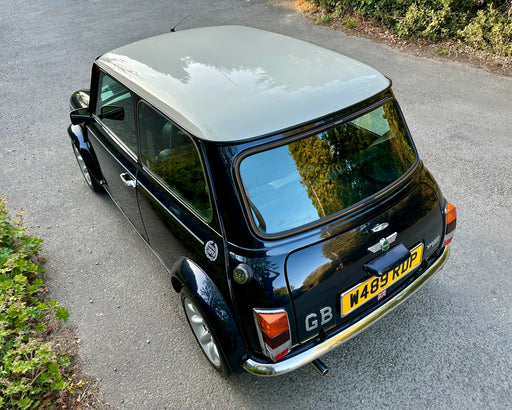
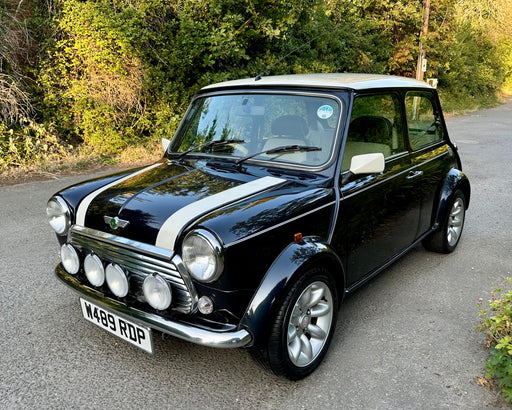
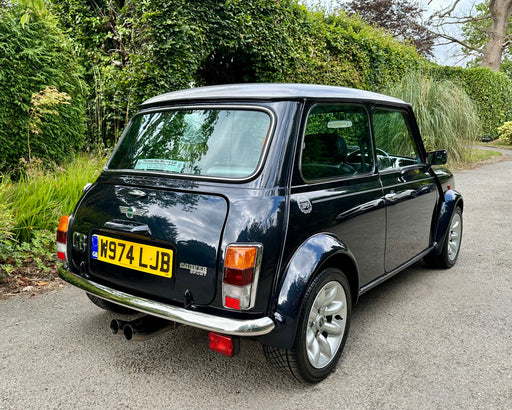
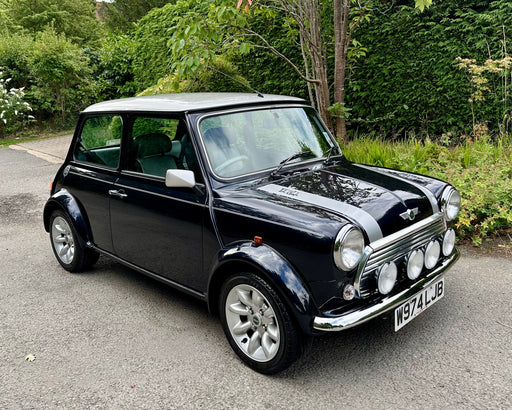
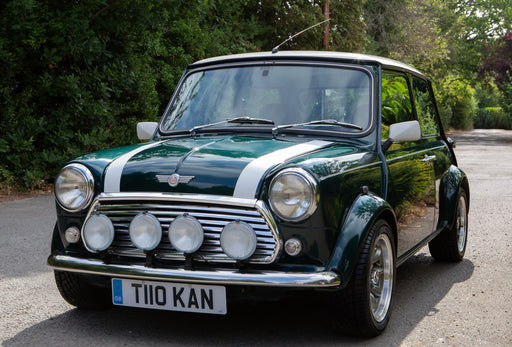
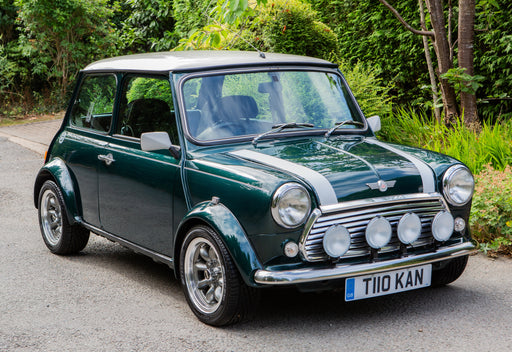
We photograph every car in a consistent setting, from every angle, so buyers can understand the condition before they enquire. Distance shots show the overall presentation, while close-ups help you assess bodywork, trim, badges, wheels and key details.
This does not replace viewing the car in person, but it gives buyers a much better starting point. If a listing avoids the key areas, ask why.

A strong Classic Mini listing should give buyers clear photos, specific model details and provenance before they arrange a viewing. Our 1999 Classic Rover Mini 40 listing is a good example of this, as it explains why the car is significant rather than simply calling it “rare”.

The full listing includes the car’s long-term ownership story and provenance, accompanying paperwork, MOT record, condition notes and a dated mileage record. That gives buyers a much clearer picture before they enquire and helps them decide whether the car is worth seeing in person.
Before arranging to view a Classic Mini, ask:
A genuine seller should be able to answer these questions clearly and provide the support you need. If the answers are vague or defensive, approach the listing with more caution.
The best Classic Mini listings give you answers before you ever see the car. Clear photos, specific history, condition notes and honest wording all help you decide whether a car is worth viewing.
Phrases such as “no rust”, “restored”, “Stage 1”, “Cooper look” and “rare” are not automatically red flags. They simply need to be supported by the right detail.
If you are looking for a carefully described Mini, browse our Classic Minis for sale or contact us for more information.
The Mini John Cooper LE 40 was unveiled in 1999, celebrating 40 remarkable years of the Mini and honouring the Cooper’s triumph in the F1 World Cha...
View detailsThis Mini Cooper Sportspack was first registered by Bristol Minis on 8th August 2000 and is presented in rare Nightfire Red with a white roof and b...
View detailsThis Mini Cooper Sportspack was first registered on 22nd February 1999 and is presented in Anthracite grey with a white roof and body decals, over ...
View detailsThis Mini Cooper Sportspack was originally supplied by Evans Halshaw Rover on 31st March 2000 and is presented in rare Anthracite grey with a white...
View detailsWe are delighted to present this stunning Mini Cooper Sport, originally supplied by Thomas Day Motors, Fleet on 30th June 2000. The Mini is finishe...
View detailsThis Mini Cooper Sportspack was originally supplied by Whichford Rover, Basingstoke on 1st March 1999 and is presented in iconic British Racing Gre...
View details