Sell your classic car

A little preventative maintenance now can help preserve your Classic Mini finish for years to come. Maintaining a vibrant finish starts with careful washing, sensible storage and understanding how to protect the distinctive colours that give Classic Minis so much of their character. After all, colours such as British Racing Green, Flame Red and Tahiti Blue are a big part of what makes a Classic Mini instantly recognisable.
Summer is when many Classic Minis spend more time on the road, attending shows and enjoying the sort of weather they were built for. The longer days and dry roads make ownership even more rewarding, but warmer conditions can also expose paintwork to UV rays, dust, tree sap, bird droppings and other seasonal elements.

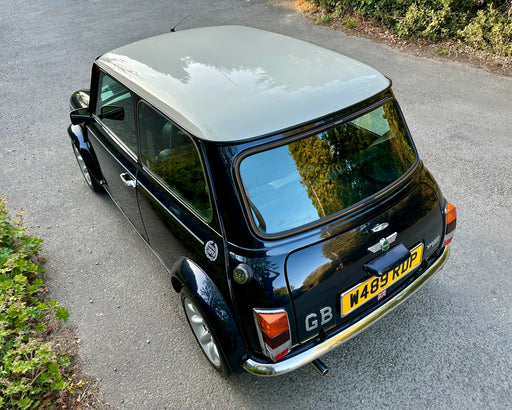
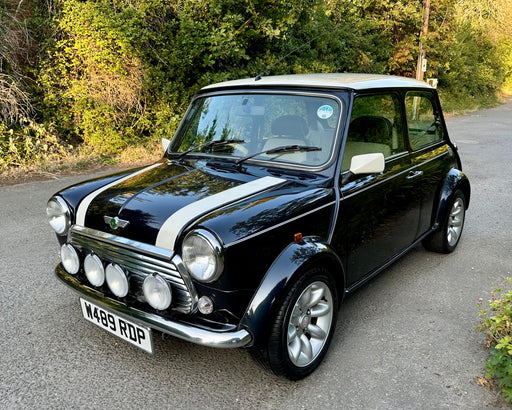
1999 Classic Rover Mini Cooper Sportspack Sport Tahiti Blue
Heat and ultraviolet light accelerate oxidation, which can slowly reduce the depth and richness of colour. This is particularly noticeable on older single-stage paints that do not benefit from the protection offered by modern paint systems. This is because the pigment is exposed directly to the elements rather than being protected beneath a clear coat.
Summer also creates ideal conditions for contaminants to bond to the paint surface. Tree sap hardens more quickly in warm weather, while bird droppings and insect residue are highly acidic and can etch into paint if left unattended.
Solid colours often show ageing differently to metallic finishes. Brighter shades such as Flame Red and Solar Red can gradually lose some of their vibrancy, while darker colours may reveal oxidation through a flatter appearance and reduced gloss.
We have noticed that Minis stored outdoors throughout summer often develop a slightly flatter finish by the end of the season, particularly red and darker-coloured cars that spend long periods in direct sunlight. Fortunately, prevention is almost always easier than correction.
During regular summer use, washing every two to three weeks is usually enough to prevent contaminants from damaging the finish.
The purpose of washing is not simply to keep the car looking presentable, it removes substances that can cause long-term deterioration. Bird droppings, insect residue and tree sap should be removed as soon as possible, regardless of when the car was last cleaned.
A pH-neutral car shampoo is usually the safest option for original paint because it cleans effectively without stripping away protective wax layers. Products from specialist detailing suppliers such as Bilt Hamber, Auto Finesse and Autoglym are widely respected amongst enthusiasts and detailers.
Household detergents, washing-up liquid and general-purpose cleaners should be avoided. While they may remove dirt, they can also strip protective products from the paint and leave surfaces more vulnerable to oxidation.
When washing your Mini, pay particular attention to:
In our experience, the cars that retain the best paint condition over time are not necessarily washed the most often, but they are cleaned before contaminants are allowed to sit on the surface for extended periods.
A light polish followed by a quality wax provides one of the safest and most effective forms of protection for most Classic Minis. For many owners, this is a straightforward job that can be completed at home with the right products and a little patience. A high-quality carnauba wax or paint sealant from a reputable detailing supplier is usually sufficient, although cars with heavily oxidised or neglected paint may benefit from professional correction before protection is applied.
It is important to understand the difference between polishing and waxing. Polish is designed to refine and improve the paint surface by removing light imperfections, while wax creates a protective barrier that helps shield paintwork from the elements.
This distinction matters because every polishing process removes a small amount of paint. On an original Mini that may have retained much of its factory finish, preserving paint thickness is often more important than achieving a flawless mirror-like shine. Original paint can only be original once.
For most cars, a sensible approach is:
A good quality wax can provide several months of protection during the summer season and should generally be renewed every eight to twelve weeks, depending on usage and storage conditions.

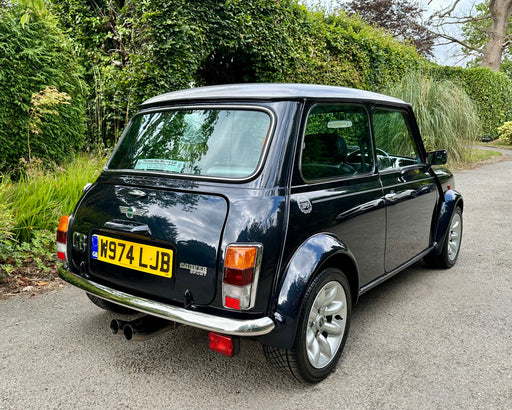
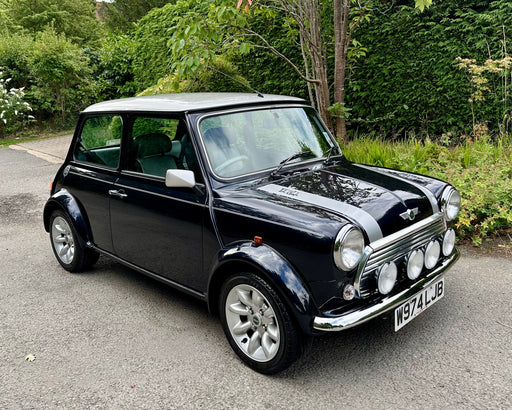
1999 Classic Rover Mini Cooper Sportspack Hawaiian Blue
Yes, certain Classic Mini colours are naturally more susceptible to fading when exposed to strong sunlight over long periods.
Brighter colours such as Flame Red and Solar Red often show the effects of ultraviolet exposure more readily than darker or metallic finishes. This does not necessarily mean the paint is deteriorating. In many cases, the colour simply loses some of its original richness over time.
As discussed in our guide on What colour Mini should I buy?, colour plays a significant role in a Mini's character and appeal. Preserving that colour helps maintain the visual identity that makes each car unique.
It is also worth remembering that ageing paint does not always diminish a car's appearance. Well-maintained original paint often develops character and depth that cannot easily be replicated. Some of the most attractive Minis we see still wear older paintwork that has been cared for consistently.
Preparation starts several days before the event, not on the morning of the show.
Allowing time for cleaning and presentation means you can focus on the details that enthusiasts often notice. While freshly washed exteriors are important, it's not always what leaves a lasting impression.
Particular attention should be given to:
Enthusiasts notice clean glass, fingerprint-free chrome trim and wheels free from brake dust as much as a freshly polished bonnet.
It is also worth carrying a quick detailing spray and a microfibre cloth on the day. Both are widely available from automotive retailers and online, and can quickly remove light dust or fingerprints. Dust settles surprisingly quickly during summer events.
A cool, dry garage remains the best environment for preserving external finishes during summer as shaded storage limits ultraviolet exposure and helps maintain a more stable temperature around the vehicle. This reduces the rate at which paintwork, rubber seals and exterior trim age.
We often find that Minis stored under breathable covers retain a deeper shine throughout the season than cars left exposed to direct sunlight every day. Non-breathable covers can trap moisture against the paint surface, particularly during temperature changes between day and night.
For owners without garage space, positioning the car away from direct sunlight whenever possible can make a noticeable difference. Even partial shade can help reduce long-term colour fading.
For more details on how to navigate hot weather, read our blog on how Classic Minis handle heatwaves.
If it’s in good condition, yes. Well-maintained original paint often tells part of a Mini's story and remains highly appealing to buyers.
There is an important distinction between patina and neglect. Light signs of age, minor imperfections and honest wear can add character. Neglected paintwork suffering from severe oxidation, peeling or corrosion is a different matter entirely.
From a value perspective, paintwork can make a significant difference to what a Classic Mini is worth. As a broad guide, a Classic Mini with well-preserved original paintwork in excellent condition may attract a premium of around 5-15% over a similar car that has been repainted to a high standard. We love the reassurance that original paint provides, as it allows us to assess the condition of the body shell more easily and confirms the car's authenticity.
A properly restored Mini with excellent paintwork is often worth about the same as, or slightly less than, a comparable car with exceptional original paint. While fresh paint can look fantastic and transform a car's appearance, we can no longer see exactly what the shell looked like beforehand. In reality, a £5,000 repaint rarely adds £5,000 to the value of a Mini. You might spend £4,000-£8,000 on a quality repaint, or considerably more on a bare-shell concours restoration, but typically only see a proportion of that investment reflected in the eventual sale price. Buyers rarely pay the full cost of restoration work.
Paintwork tends to affect values most dramatically when condition is poor. A Mini showing lacquer peel, significant fading, mismatched panels, overspray, bubbling or evidence of poor DIY repairs can easily be worth 10-30% less than an equivalent well-presented example. On a £15,000 Mini, that represents a reduction of £1,500-£4,500, while on a desirable Cooper or limited-edition model the difference can be considerably greater.

2001 Classic Rover Mini Cooper Sport Solar Red
Historically, we found that buyers were attracted to Minis restored to concours condition, but more so now there is growing appreciation for originality. Factory panel gaps, original spot welds, documented ownership history, honest patina and well-preserved factory paintwork are increasingly more valuable. We find that buyers would rather own a Mini with 95% original paint and a few age-related stone chips than a freshly painted car where the history and originality are less obvious.
Ultimately, the best prices are achieved by Minis that strike the right balance between originality, preservation and presentation. Whether that is a carefully maintained survivor car wearing its factory paint or a sympathetically restored example with a high-quality repaint, buyers are looking for evidence that the car has been cherished and maintained throughout its life.
If you are looking to buy or sell a well-presented Classic Mini, browse our available Minis or contact us for a quotation.
Supplied new by Mill Garage Rover on 1st March 2000, this Mini Cooper Sportspack is finished in iconic British Racing Green with a contrasting whit...
View detailsThe Mini John Cooper LE 40 was unveiled in 1999, celebrating 40 remarkable years of the Mini and honouring the Cooper’s triumph in the F1 World Cha...
View detailsThis Mini Cooper Sportspack was first registered by Bristol Minis on 8th August 2000 and is presented in rare Nightfire Red with a white roof and b...
View detailsThis Mini Cooper Sportspack was first registered on 22nd February 1999 and is presented in Anthracite grey with a white roof and body decals, over ...
View detailsThis Mini Cooper Sportspack was originally supplied by Evans Halshaw Rover on 31st March 2000 and is presented in rare Anthracite grey with a white...
View detailsWe are delighted to present this stunning Mini Cooper Sport, originally supplied by Thomas Day Motors, Fleet on 30th June 2000. The Mini is finishe...
View details